
Drug withdrawal symptoms usually begin within a few hours to two days after the last dose, are at their worst in the first two to four days, and mostly settle within one to two weeks. The exact timeline depends on the drug. Withdrawal from alcohol and sleeping or anxiety pills (benzodiazepines such as alprazolam) can cause seizures and can be life-threatening, so it should always be managed by a doctor. Withdrawal from heroin (brown sugar) or codeine cough syrup is very unpleasant but rarely dangerous in itself. The real danger comes later: an overdose if the person uses again after their tolerance has dropped.
This guide explains what withdrawal is, how long it lasts for the drugs most commonly used in India, which symptoms need a hospital straight away, and what happens during medically supervised detox. It is written for families as well as for the person who wants to stop.
What Is Drug Withdrawal?
When someone uses a drug regularly, the body and brain adjust to having it. If they suddenly stop or cut down, the body has to readjust, and that produces withdrawal symptoms. Withdrawal often feels like the opposite of the drug: a drug that calms causes anxiety and shakiness when stopped, and a stimulant that energises causes exhaustion and low mood.
How strong withdrawal is depends on which drug was used, how much and for how long, whether several drugs were mixed, the person’s age and physical health, and whether withdrawal happens with medical support or alone.
This affects a very large number of families. India’s national survey on substance use found that more than 5.7 crore people are affected by harmful or dependent alcohol use, and about 72 lakh people have problems with cannabis use.
How Long Does Drug Withdrawal Last?
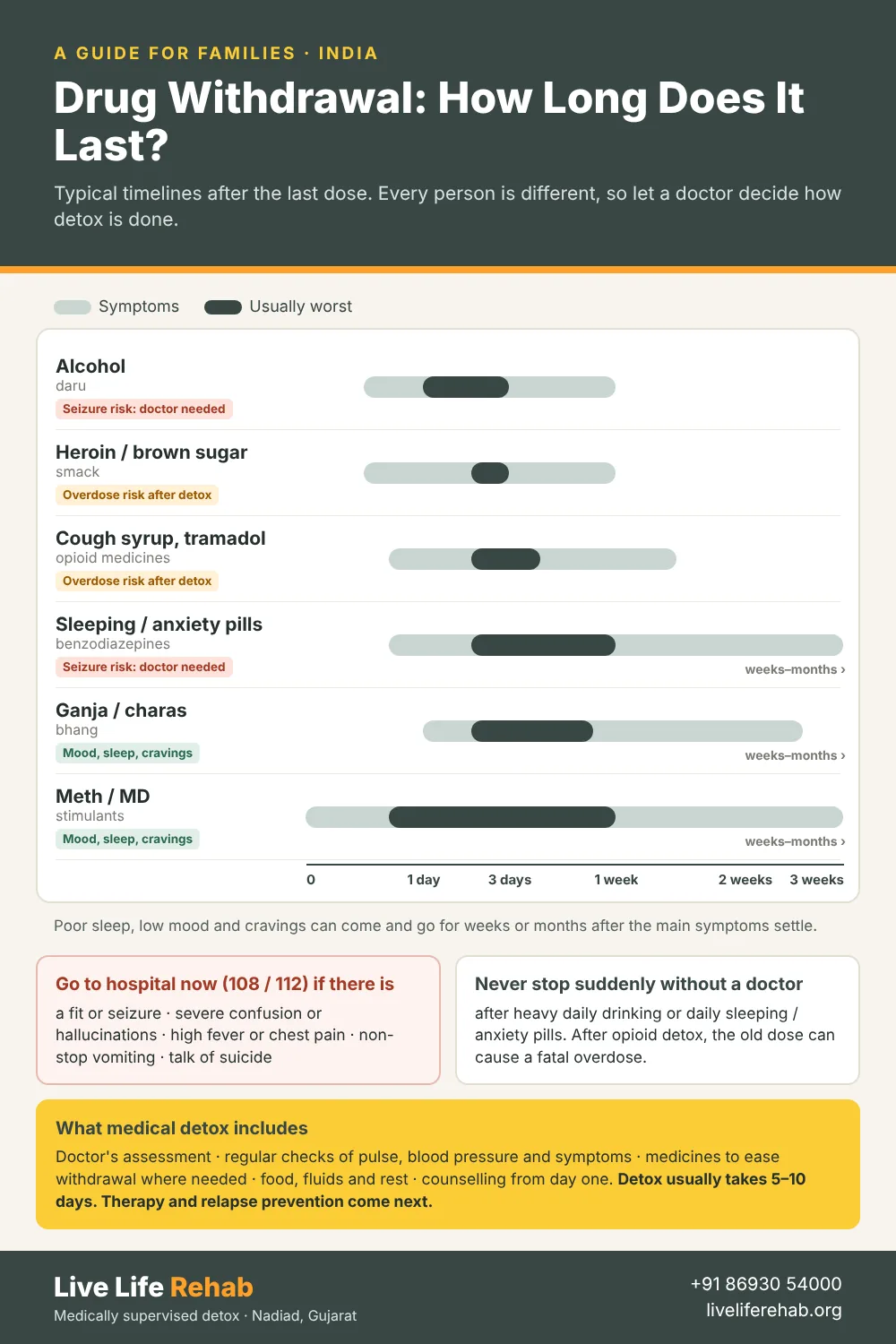
The table below shows typical timings. They are averages, not promises: some people feel better sooner, and some symptoms, especially poor sleep, low mood and cravings, can continue for weeks or months.
| Substance | Symptoms start | Usually worst | Mostly settled | Main risk |
|---|---|---|---|---|
| Alcohol (daru) | 6–24 hours | 24–72 hours | About a week | High: seizures (24–48 h), delirium tremens (48–72 h) |
| Heroin / brown sugar / smack | 6–24 hours | 48–72 hours | 5–7 days | Low in itself; high risk of relapse and overdose after detox |
| Codeine cough syrup, tramadol and other opioid medicines | Similar to heroin | First few days | About a week; longer-acting medicines can take longer | As for heroin; often mixed with other medicines |
| Sleeping and anxiety pills (benzodiazepines, e.g. alprazolam) | A few hours to a few days | Varies by medicine | A few weeks; some symptoms for months | High: seizures if stopped suddenly |
| Ganja / charas / bhang | 1–2 days | Days 2–6 | 2–3 weeks; sleep problems can last longer | Low physical risk; irritability and poor sleep drive relapse |
| Meth, MD (mephedrone) and other stimulants | Soon after stopping (“crash”) | First week | Settle after a week, mostly gone within a month | Low physical risk; depression and paranoia can be severe |
For a detailed, day-by-day guide to alcohol, see our article on alcohol withdrawal symptoms and timeline.
What Are the Common Withdrawal Symptoms?
Physical symptoms
- Sweating, shivering, hot and cold flushes, goosebumps
- Shaking hands (tremor)
- Nausea, vomiting, diarrhoea, stomach cramps
- Body ache, muscle and joint pain
- Runny nose, watery eyes and yawning (typical of heroin and cough syrup)
- Fast heartbeat and raised blood pressure
- Headache, poor appetite, or a big increase in appetite after stimulants
Mental and emotional symptoms
- Strong cravings for the drug
- Anxiety, restlessness, irritability and anger
- Trouble sleeping, vivid dreams or nightmares
- Low mood, crying, loss of interest
- Poor concentration and confusion
- Paranoia, especially after meth or MD
What to Expect, Stage by Stage
Stage 1: the first 24 hours
Early symptoms appear as the last dose wears off: restlessness, sweating, anxiety, cravings and trouble sleeping. After alcohol, shaking hands and a racing heart are common. This is when many people give in and use again “just to feel normal”.
Stage 2: days 2 to 4, the peak
For most drugs, symptoms are at their strongest now. Heroin and cough syrup withdrawal peaks around 48–72 hours, with body pain, vomiting, diarrhoea and intense cravings. After heavy drinking, this is also the danger window for seizures and delirium tremens, which is why alcohol detox needs medical watch during these days.
Stage 3: days 5 to 14, settling down
Physical symptoms ease and appetite and energy slowly return. Sleep, mood and cravings often still fluctuate. In a residential detox, this is when counselling and therapy start to take centre stage.
Stage 4: weeks to months, the long tail
Some symptoms, such as poor sleep, low mood, anxiety and cravings, can come and go for weeks or months. This is normal and does not mean treatment has failed, but it is a high-risk time for relapse. Ongoing therapy, a daily routine and family support make the biggest difference here.
Which Withdrawals Are Dangerous?
- Alcohol: after long, heavy drinking, withdrawal can cause seizures and delirium tremens, a state of severe confusion, fever and hallucinations that can be fatal without treatment.
- Sleeping and anxiety pills (benzodiazepines): stopping suddenly after daily use, especially at high doses, can cause seizures. These medicines should be reduced slowly, only under a doctor’s guidance.
- Several substances together: mixing alcohol, pills and opioids makes withdrawal harder to predict and harder to manage at home.
- Existing health problems: heart disease, liver disease, epilepsy, diabetes, pregnancy or a mental illness all raise the risk.
- Overdose after detox: after even a few days without heroin, cough syrup or other opioids, tolerance drops sharply. Using the old amount again can cause a fatal overdose. Families should know this risk, especially in the first weeks after discharge.
When Should You Go to Hospital Immediately?
Call 108 or 112, or go to the nearest emergency department, if someone in withdrawal has:
- A seizure (fit) or loses consciousness
- Severe confusion, does not recognise people, or sees and hears things that are not there
- A high fever, very fast heartbeat or chest pain
- Repeated vomiting and cannot keep fluids down
- Talks about suicide or harming themselves
Can Withdrawal Be Managed at Home?
Sometimes, but only with a doctor’s advice. Mild withdrawal, for example from ganja in an otherwise healthy person, can often be managed as an outpatient with regular check-ins. But a doctor should decide where detox happens if there has been heavy, daily drinking, daily use of sleeping or anxiety pills, injecting drug use, mixing of several substances, earlier seizures or a serious health condition.
“Cold turkey” at home, or locking someone in a room until they get through it, is not safe, and it rarely leads to lasting recovery. Neither do centres that offer detox without a doctor; our guide on nasha mukti kendra vs rehab centre explains what to check.
What Happens During Medically Supervised Detox?
- Assessment: the doctor asks which substances were used, how much and for how long, checks physical and mental health, and runs any tests needed.
- Monitoring: pulse, blood pressure, temperature and withdrawal symptoms are checked regularly, especially in the first 72 hours.
- Medicines to ease symptoms: where needed, the doctor prescribes medicines to reduce withdrawal, prevent complications and help with sleep. Doses are adjusted daily and reduced as the person improves.
- Food, fluids and rest: good nutrition and hydration help the body recover.
- Counselling from the start: talking with counsellors and psychologists begins during detox, so motivation is built while the body heals.
Residential detox usually takes about five to ten days. But detox is only the first step. It treats withdrawal, not addiction itself. Lasting recovery comes from what follows: therapy, relapse-prevention planning and family support. Our guide to what happens in the first week at a rehab centre describes this in more detail.
How Can Families Help During Withdrawal?
- Don’t try to manage it alone. Speak to a doctor before the person stops, especially for alcohol or pills.
- Stay calm and patient. Irritability and anger are symptoms of withdrawal, not a sign that the person doesn’t care.
- Keep the home free of alcohol, drugs and spare medicines during and after detox.
- Know the emergency signs listed above, and keep the 108 number handy.
- Plan for after detox, including therapy, follow-up and what the person will do with their time.
- Look after yourself too. Family counselling helps you cope and helps you support recovery without enabling.
Our guide on how to help a family member with drug addiction covers how to start the conversation and plan the next steps.
More on Specific Substances
- What is brown sugar? Effects and treatment
- Cough syrup addiction in India
- Prescription drug addiction: cough syrup, tramadol and alprazolam
- Ganja: side effects, addiction risk and treatment
- What is crystal meth and why is it so addictive?
Live Life Rehab: Medically Supervised Detox in Nadiad, Gujarat
At Live Life Rehab in Nadiad, withdrawal is never something a patient has to face alone. Our medically supervised detox is led by doctors and followed by a full treatment programme: care from a team of doctors, psychologists and addiction counsellors, one-on-one therapy three times a week, and family counselling. We treat drug addiction as well as alcohol, cough syrup and pill dependence, for families from Ahmedabad, Vadodara and across Gujarat.
Call +91 86930 54000 (India) or WhatsApp +91 79901 77863 (international families), or send us a message. Conversations are confidential. For help finding government-supported treatment, you can also call the national de-addiction helpline on 14446.
Frequently Asked Questions
How long do drug withdrawal symptoms last?
For most drugs, the worst symptoms last two to four days and most physical symptoms settle within one to two weeks. Withdrawal from sleeping or anxiety pills can take several weeks, and problems such as poor sleep, low mood and cravings can come and go for weeks or months.
What are the first signs of drug withdrawal?
Early signs usually include restlessness, anxiety, sweating, trouble sleeping and strong cravings. After alcohol, shaking hands and a fast heartbeat are common. After heroin or codeine cough syrup, a runny nose, watery eyes, yawning and body ache often appear first.
Which drug withdrawal is the most dangerous?
Withdrawal from alcohol and from benzodiazepines (sleeping and anxiety pills such as alprazolam) is the most dangerous, because it can cause seizures and, in the case of alcohol, delirium tremens. Both should be managed by a doctor.
Can you die from drug withdrawal?
Severe alcohol withdrawal and sudden stopping of benzodiazepines can be fatal without medical care. Opioid withdrawal is rarely life-threatening in itself, but people who use again after detox are at high risk of a fatal overdose, because their tolerance has dropped.
Is it safe to stop alprazolam suddenly?
No. After regular daily use, stopping alprazolam or similar medicines suddenly can cause severe anxiety, sleeplessness and seizures. The dose should be reduced gradually under a doctor’s supervision.
How long does detox take at a rehab centre?
Medically supervised detox usually takes about five to ten days, depending on the substance, the amount used and the person’s health. It is the first step of treatment, and it should be followed by therapy and relapse-prevention planning.