




 (+91 86930 54000)
What Is Crystal Meth and Why Is It So Addictive? Understanding Its Effects and Risks
Crystal meth is one of the most addictive and dangerous stimulant drugs in the world. Known by names such as ice, crystal, glass, shabu, and methamphetamine, this substance can rapidly affect the brain and body, leading to intense cravings, behavioral changes, and long-term health consequences.
While some people initially use crystal meth for its temporary feelings of energy, confidence, or alertness, repeated use often results in dependency that becomes increasingly difficult to control. Understanding how crystal meth affects the brain, why it is so addictive, and what treatment options are available can help individuals and families recognize the risks early and seek support when needed.
What Is Crystal Meth?
Crystal meth, short for crystal methamphetamine, is a powerful synthetic stimulant that affects the central nervous system. It typically appears as clear or bluish crystal-like rocks and is commonly smoked, snorted, swallowed, or injected.
Around the world, crystal meth is known by different names, including:
- Ice
- Crystal
- Glass
- Shabu
- Tina
- Speed
- Methamphetamine
Although the names vary, the effects and risks remain largely the same.
How Crystal Meth Affects the Brain
Crystal meth creates a rapid release of dopamine, a neurotransmitter associated with pleasure, motivation, and reward.
This sudden dopamine surge can cause:
- Intense euphoria
- Increased energy
- Heightened alertness
- Reduced appetite
- Increased confidence
However, repeated use begins to change how the brain functions. Over time, the brain becomes less able to produce or respond to dopamine naturally, making it increasingly difficult for users to feel pleasure without the drug.
This neurological change is one of the main reasons meth addiction develops so quickly.
Why Is Crystal Meth So Addictive?
One of the most common questions people ask is why crystal meth addiction develops faster than many other substances.
Intense Dopamine Release
Methamphetamine releases significantly higher amounts of dopamine compared to many other drugs. This creates powerful feelings of pleasure and reinforcement.
The brain quickly associates meth use with reward, increasing the likelihood of repeated use.
Rapid Onset of Effects
When smoked or injected, crystal meth reaches the brain very quickly. The fast onset creates an immediate and intense high that many users attempt to recreate repeatedly.
Strong Psychological Dependence
Unlike some substances that primarily create physical dependency, crystal meth often produces severe psychological cravings.
Many users report:
- Obsessive thoughts about using
- Strong urges to continue taking meth
- Difficulty enjoying daily activities without the drug
This psychological dependence can persist long after stopping use.
Early Signs of Crystal Meth Use
Recognizing early warning signs can help individuals seek support before addiction becomes severe.
Behavioral Changes
People using crystal meth may experience:
- Increased secrecy
- Unusual bursts of energy
- Staying awake for long periods
- Aggressive or impulsive behavior
- Reduced interest in responsibilities
Behavioral changes are often among the first noticeable signs.
Physical Symptoms
Common physical signs include:
- Rapid weight loss
- Dilated pupils
- Excessive sweating
- Tooth grinding
- Skin picking or scratching
- Sleep disturbances
Many individuals also experience a significant decline in overall physical health over time.
Emotional and Mental Health Changes
Crystal meth can affect emotional stability and mental health.
Some common symptoms include:
- Anxiety
- Irritability
- Mood swings
- Paranoia
- Depression
- Social withdrawal
These symptoms often become more severe as use continues.
Short-Term Effects of Crystal Meth
The immediate effects of methamphetamine can vary depending on the amount used and individual health factors.
Short-term effects may include:
- Increased energy
- Elevated heart rate
- Reduced appetite
- Hyperactivity
- Increased confidence
- Risk-taking behavior
Although some users view these effects as desirable initially, they often come with significant physical and psychological risks.
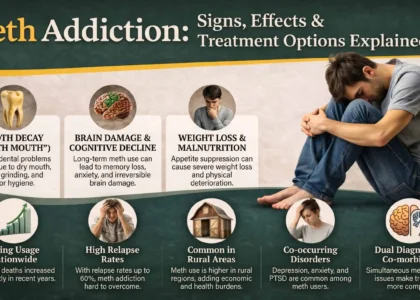
Long-Term Effects of Meth Addiction
Long-term crystal meth use can have serious consequences for both physical and mental health.
Physical Health Effects
Long-term use may contribute to:
- Severe weight loss
- Dental problems (“meth mouth”)
- Heart complications
- High blood pressure
- Skin infections
- Weakened immune function
Mental Health Effects
Mental health challenges associated with meth addiction may include:
- Chronic anxiety
- Depression
- Hallucinations
- Paranoia
- Memory problems
- Cognitive impairment
These effects can continue even after someone stops using meth.
Meth Withdrawal: What Happens When Someone Stops?
Many individuals continue using meth because they fear withdrawal symptoms.
Common Meth Withdrawal Symptoms
Withdrawal may involve:
- Extreme fatigue
- Depression
- Increased appetite
- Anxiety
- Sleep problems
- Strong cravings
While meth withdrawal is usually not life-threatening, professional support can make the recovery process safer and more manageable.
How Crystal Meth Addiction Is Treated
Recovery from meth addiction often requires more than simply stopping drug use. Effective treatment typically addresses both the physical and psychological aspects of addiction.
Detox and Stabilization
The first stage often focuses on helping individuals safely stop using meth while managing withdrawal symptoms and stabilizing physically and emotionally.
Many people benefit from professional addiction treatment guidance during this stage.
Therapy and Counseling
Behavioral therapies play a central role in meth addiction recovery.
Common approaches include:
- Cognitive Behavioral Therapy (CBT)
- Individual counseling
- Group therapy
- Family support programs
- Relapse prevention planning
These therapies help individuals understand triggers, manage cravings, and develop healthier coping strategies.
Long-Term Recovery Support
Recovery is an ongoing process rather than a single event.
Successful recovery often involves:
- Continued counseling
- Lifestyle changes
- Emotional healing
- Peer support
- Structured rehabilitation programs
Long-term support helps reduce relapse risks and improve recovery outcomes.
When to Seek Help for Crystal Meth Addiction
Professional help may be needed if meth use begins affecting:
- Physical health
- Mental well-being
- Relationships
- Work or education
- Daily responsibilities
Seeking help early often leads to better recovery outcomes and reduces the risk of long-term complications.
Individuals struggling with meth dependency often benefit from recovery treatment support before addiction becomes more severe.
Conclusion
Crystal meth is one of the most addictive stimulant drugs due to its powerful effects on the brain’s reward system. While initial use may produce temporary feelings of energy and confidence, long-term use can lead to severe physical health problems, emotional instability, and dependency.
Understanding the risks, recognizing the warning signs, and seeking professional support early can make a significant difference in recovery outcomes. With the right treatment, therapy, and rehabilitation support, long-term recovery from crystal meth addiction is possible.
FAQs
What is crystal meth?
Crystal meth is a highly addictive stimulant drug made from methamphetamine that affects the brain and central nervous system.
Why is crystal meth so addictive?
Crystal meth causes a rapid and powerful release of dopamine, creating intense feelings of pleasure and reinforcing repeated drug use.
What are the signs of crystal meth addiction?
Common signs include weight loss, sleep problems, mood swings, anxiety, secrecy, hyperactivity, and strong cravings.
Can meth addiction affect mental health?
Yes. Meth use is often associated with anxiety, depression, paranoia, hallucinations, and emotional instability.
How long does meth withdrawal last?
Withdrawal timelines vary, but symptoms can last from several days to several weeks depending on the severity of addiction.
Is recovery from meth addiction possible?
Yes. With therapy, counseling, rehabilitation support, and long-term recovery planning, many individuals successfully recover from meth addiction.
How can someone start treatment for crystal meth addiction?
Treatment usually begins with a confidential assessment followed by a personalized recovery and rehabilitation plan.