




 (+91 86930 54000)
India’s Drug Crisis — How Cough Syrups, Tramadol and Alprazolam Are Fuelling Addiction
Introduction
India’s drug crisis is no longer driven primarily by traditional narcotics. Today, one of the fastest-growing contributors to this crisis comes from medicine cabinets and chemist shops rather than street drugs.
Codeine-based cough syrups, tramadol, and alprazolam are increasingly driving substance abuse cases across the country, particularly among young people and adolescents. Because these are legal pharmaceutical products, families often don’t recognise the danger until dependency has already taken hold.
This article explains how prescription drug addiction develops, why it has become such a significant part of India’s drug crisis, and what treatment looks like today.

Understanding India’s Drug Crisis
India’s drug landscape has shifted significantly in recent years. According to the Narcotics Control Bureau’s 2025 annual report, pharmaceutical opioids have become what the agency describes as a dangerous second wave of addiction, with diverted cough syrups, tramadol, and alprazolam increasingly replacing traditional narcotics as a primary driver of substance abuse in several parts of the country.
The report points to the easy availability of cheap, legally manufactured drugs through non-compliant pharmacies as a major factor making diverted pharmaceuticals an accessible substitute for harder narcotics. Earlier enforcement data has also shown millions of tablets of tramadol intercepted across multiple states, often diverted from legitimate pharmaceutical supply chains rather than smuggled through traditional trafficking routes.
This matters because pharmaceutical drugs are easier to access, often cheaper, and carry far less social stigma than illegal narcotics—making them a quieter, more dangerous entry point into addiction, especially for teenagers and young adults who would never consider approaching a drug dealer but may not hesitate to ask a local chemist for a cough syrup.
A National Crisis, Not Just a Regional One
While pharmaceutical diversion has been most documented in certain states, India’s drug crisis is not confined to one region—the underlying pattern of easy access to legally manufactured but easily misused medication exists across the country, including Gujarat.
National research on substance use among students has found that opioids and pharmaceutical drugs now rank among the more commonly misused substances by adolescents, often introduced through peer groups, social media, and messaging apps rather than traditional drug networks. Studies have also noted a troubling trend toward younger ages of first use, with some research documenting experimentation beginning in early adolescence.
This shift means that prescription drug addiction is no longer a problem confined to one part of the country or one type of household. It is a pattern that can develop quietly in any family, often mistaken for ordinary medicine use until dependency has already set in.
The Three Most Commonly Abused Prescription Drugs in India
Codeine-Based Cough Syrups
Codeine is an opioid. Cough syrups containing codeine are intended for short-term use to treat coughs, but when taken in large quantities, they produce a sedative, euphoric effect similar to other opioids. Repeated misuse leads to the same physical dependency seen with heroin or brown sugar.
Tramadol
Tramadol is a prescription painkiller and also an opioid. It is frequently diverted and abused because it is cheap and has historically been easier to obtain than stronger controlled substances. Long-term misuse causes both physical dependency and serious withdrawal symptoms.
Alprazolam
Alprazolam is a benzodiazepine prescribed for anxiety and panic disorders. It produces a calming, sedative effect, which makes it appealing for recreational misuse. Benzodiazepine dependency is particularly difficult to treat because abrupt withdrawal can be medically dangerous and requires careful supervision.

Why Are These Drugs So Easy to Access?
Diversion of pharmaceutical drugs typically happens through a few common channels:
- Chemists selling controlled substances without a valid prescription
- Prescriptions being filled in bulk and resold
- Online pharmacies with weak verification processes
Because these substances are manufactured legally and packaged like normal medicine, many young users and even some families underestimate just how addictive and dangerous they can be.
Why Adolescents Are Particularly at Risk
Prescription drug misuse among adolescents in India has grown for a specific reason—accessibility combined with low awareness. A teenager is far less likely to seek out a drug dealer than to ask a local chemist for a cough syrup or borrow tablets from a family member’s medicine cabinet.
Peer pressure, academic stress, and curiosity often play a role in initial experimentation, but the chemical dependency that follows is identical to that of any other opioid or sedative addiction.
Signs of Prescription Drug Addiction
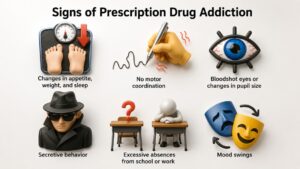
Physical Signs
- Drowsiness or excessive sleepiness at unusual times
- Slurred speech
- Coordination problems
- Constricted pupils (with opioid-based drugs)
- Withdrawal symptoms when the substance is unavailable
Behavioural Signs
- Requesting refills earlier than expected
- Visiting multiple chemists or doctors for the same medication
- Secretive behaviour around medicine use
- Sudden financial strain with no clear explanation
- Withdrawal from family, friends, and usual activities
Psychological Signs
- Increased anxiety or irritability when not using
- Mood swings
- Difficulty concentrating
- Strong cravings for the substance
Withdrawal and Health Risks
Withdrawal from opioid-based prescription drugs like codeine and tramadol mirrors withdrawal from heroin and brown sugar—muscle pain, sweating, nausea, anxiety, and insomnia. Withdrawal from alprazolam and other benzodiazepines carries additional risk, including the possibility of seizures if stopped abruptly without medical supervision.
This is why prescription drug withdrawal should never be attempted without professional support. Medical supervision during detox significantly reduces both discomfort and danger.
Prescription Drug Addiction Treatment in India
Recovery from prescription drug addiction follows the same evidence-based path as recovery from any substance dependency, with some specific considerations.
- Medically supervised detox—particularly critical for benzodiazepines like alprazolam, where withdrawal must be tapered gradually under medical supervision rather than stopped abruptly.
- Individual therapy and counselling—addressing the underlying reasons for misuse, whether stress, anxiety, peer influence, or untreated pain.
- Family education—many families don’t realise prescription misuse is happening until it has progressed significantly. Family counselling helps rebuild understanding and trust.
- Relapse prevention—since these substances remain legally available, relapse prevention planning must specifically address how to avoid easy re-access.
At Live Life Rehab, our de-addiction treatment programme is designed to help individuals and families across Gujarat and India address this often-overlooked part of India’s drug crisis. Our prescription drug addiction treatment combines medical supervision, therapy, and long-term recovery support with the same seriousness given to illegal substance dependency.

What Families Should Do
If you suspect a family member, especially a teenager or young adult, is misusing prescription medication, avoid confrontation built on accusation. Start with concern rather than blame.
Look for patterns:
- Repeated requests for the same medicine
- Unusual drowsiness
- Secretive behaviour around medicine cabinets
Professional guidance early on leads to better outcomes than waiting until dependency is severe.
Frequently Asked Questions
Is cough syrup addiction a real medical condition?
Yes. Codeine-based cough syrup misuse leads to genuine opioid dependency, with the same physical and psychological symptoms as other opioid addictions.
Can you become addicted to tramadol even with a prescription?
Yes. Tramadol carries dependency risk even when initially used as prescribed, especially with prolonged use or higher than recommended doses.
Is alprazolam withdrawal dangerous?
Yes. Abrupt withdrawal from alprazolam and other benzodiazepines can cause seizures. Withdrawal should always be medically supervised and gradually tapered.
Is prescription drug addiction part of India’s drug crisis?
Yes. National drug enforcement data has identified diverted pharmaceutical drugs—including cough syrups, tramadol, and alprazolam—as a growing contributor to India’s drug crisis, alongside more traditional narcotics.