
Diwali can be one of the riskiest times of year for someone recovering from alcohol, drug or gambling addiction, but a little planning makes a big difference. Agree on a plan before the celebrations begin. Keep alcohol and money-based card games away from your loved one. Protect their sleep, therapy and daily routine. Know the early warning signs of a relapse. Families who prepare together can keep the festival joyful without putting recovery at risk.
Diwali falls on 8 November this year. For most families it means lights, sweets, visitors and late nights. For someone who has recently come home from rehab, it can also mean drinks offered at every gathering, a card table in the drawing room and relatives who don’t know what to say. This guide explains why the festival season is hard, and what families can do before, during and after Diwali.
Why Is Diwali Hard for Someone in Recovery?
Recovery depends on routine, and Diwali changes almost everything about routine at once. Common triggers include:
- Social pressure. Hosts offer drinks out of hospitality, and refusing again and again is tiring, especially when others don’t know about the person’s recovery.
- Card parties. Playing teen patti and other card games for money is a Diwali tradition in many homes. For someone with a gambling problem, the table can feel impossible to walk away from.
- Extra money. Festival bonuses, gifts and shopping cash mean more money is within reach, which is a risk for both drinking and gambling.
- Late nights and broken routine. Less sleep, irregular meals and missed therapy sessions weaken self-control.
- Old company. Festivals bring back friends and relatives who were part of the drinking or betting life.
- Emotional stress. Family tension, guilt about the past or loneliness can all rise during holidays.
Relapse is common in every long-term illness, and it is not a sign that treatment has failed. The US National Institute on Drug Abuse puts relapse rates for substance use disorders at 40–60%, similar to conditions such as asthma and high blood pressure. Knowing the risk lets families plan for it instead of fearing it.
Why Are Card Games During Diwali a Risk?
Gambling disorder is a recognised behavioural addiction, and it affects the brain’s reward system in a similar way to alcohol and drugs. For someone recovering from it, a “friendly” game for small stakes is not harmless fun. It can restart the same cycle of chasing losses, secrecy and borrowing.
- Keep money games away from your loved one, even “just for a few rounds”.
- If cards are a family tradition you want to keep, plan other activities for them during that time, or play games that don’t involve cards or betting.
- Watch for online betting too. Since 2025, online games played for real money have been banned in India, so any app or website asking your loved one to deposit money to play is a red flag.
Our page on gambling and satta addiction treatment explains the signs and how gambling addiction is treated.
Why Is “Just One Drink” a Problem?
For someone recovering from alcohol dependence, a single festive drink is rarely just one. Even in Gujarat, where alcohol is prohibited, it often appears at private gatherings during the festival season. After a period of not drinking, tolerance is lower, so drinking at the old level can be more dangerous than before. A return to heavy drinking followed by a sudden stop can also bring back alcohol withdrawal symptoms, which can be serious and need medical care.
The same applies to drugs. A “festival exception” often becomes the start of a relapse, not a one-off.
Before Diwali: Make a Plan Together
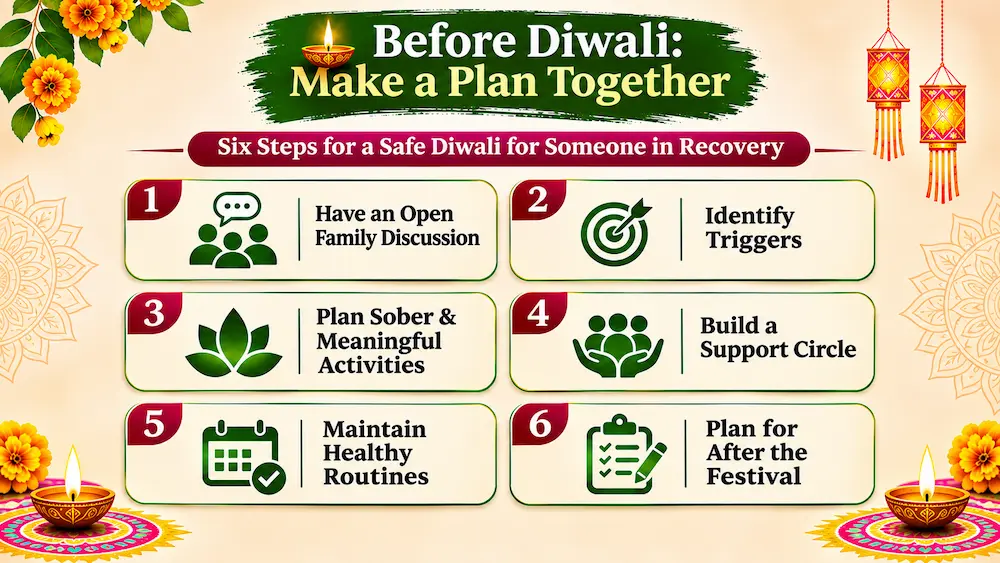
The most useful step is a calm conversation a few days before the celebrations, with your loved one involved rather than decided for. Agree on:
- Which events to attend, and which ones to skip this year
- An exit plan: a signal, a reason to leave early and a trusted person to leave with
- What to say when someone offers a drink or a seat at the card table, and who will step in to help
- Money: how cash, cards and festival gifts will be handled during the week, agreed together and not imposed
- Routine: sleep times, meals, exercise or yoga, and any counselling sessions, which should not be cancelled for the festival
- Who to call if cravings become strong: a family member, a sponsor or their counsellor
During the Celebrations: What Families Can Do
- Keep your home alcohol-free for the festival period, and serve good non-alcoholic drinks, such as fresh juices, nimbu pani and chaas, so no one feels left out.
- Give them a role. Decorating, cooking, lighting diyas with children or managing the puja keeps your loved one involved and busy.
- Celebrate in the daytime where possible. Morning puja, family lunches and visits to temples are lower-risk than late-night parties.
- Check in quietly. A short “How are you doing?” away from guests helps more than watching them closely.
- Notice and praise. Getting through a festival sober is a real achievement. Say so.
What Should You Say to Relatives and Guests?
Your loved one decides how much to share. Most of the time, a short and friendly line is enough:
| Instead of | Try |
|---|---|
| Explaining their whole treatment history | “He’s not drinking these days, and he’s feeling much better for it.” |
| Arguing with a relative who keeps offering a drink | “No, thank you. We’ve got some lovely nimbu pani here instead.” |
| Inviting them to “just sit” at the card table | “Come and help me with the rangoli. We’re short of hands.” |
| Joking about the past in front of guests | Keeping the past private, and praising what they’re doing now |
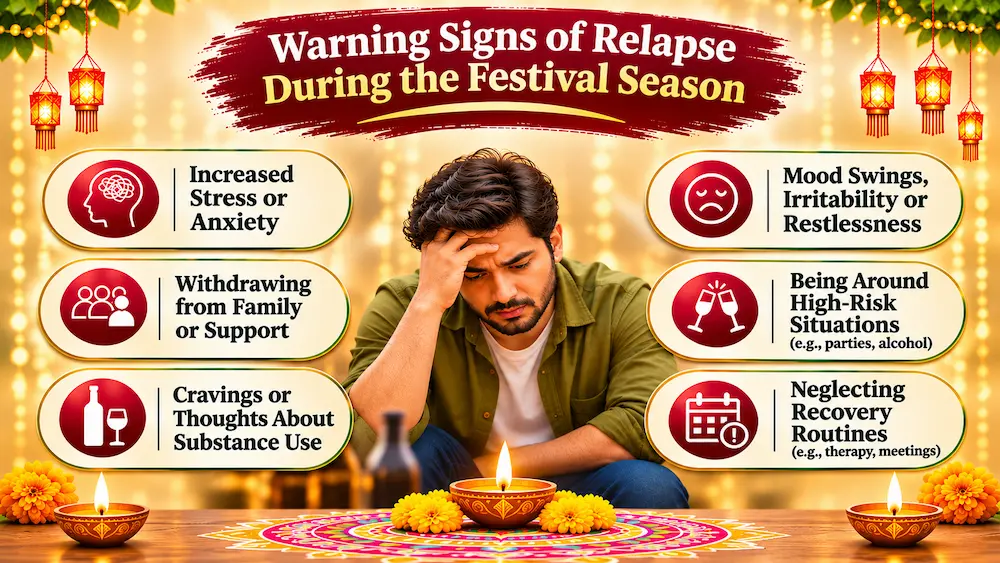
What Are the Warning Signs of a Relapse?
A relapse rarely happens without warning. Look out for:
- Talking about “just one drink” or “one small game”, or romanticising old times
- Skipping counselling, meetings or medication
- Money going missing, new borrowing or secretive phone use
- Spending time with old drinking or betting friends
- Mood swings, irritability, poor sleep or withdrawing from family
- The smell of alcohol, unusual tiredness or signs of drug use
What If a Slip Happens?
A single slip (often called a lapse) does not have to become a full relapse. How the family responds in the first few hours matters a lot.
- Stay calm and avoid shaming. Anger and humiliation usually lead to more hiding, not less.
- Talk the next day, when they are sober, about what happened and what would help.
- Contact their counsellor or treatment team as soon as possible. As NIDA puts it, relapse is a sign that treatment needs to be resumed or adjusted, not that it has failed.
- Get medical help for heavy drinking or drug use. Stopping suddenly after heavy use can be dangerous.
In an emergency, such as unconsciousness, a seizure, very slow breathing or any talk of self-harm, call 112 or 108, or go to the nearest hospital straight away. For free support at any hour, call Tele-MANAS on 14416 or the national drug de-addiction helpline on 14446.
Look After Yourself Too
Festivals are tiring for families living with addiction. You may be watching, worrying and hosting all at once. Share the load with one or two trusted relatives, keep your own rest and routine, and remember that you are not responsible for another adult’s choices. Our guide on how to help a family member with drug addiction has more on supporting a loved one without burning out.
Getting Help at Live Life Rehab
If you are worried about how your loved one will cope this Diwali, or if a relapse has already started, you don’t have to wait until after the festival to ask for help. Live Life Rehab, a residential rehabilitation centre in Nadiad, Gujarat, treats alcohol, drug and gambling addiction. Care includes medically supervised detox, one-on-one therapy, and family counselling.
Call +91 86930 54000 (India) or WhatsApp +91 79901 77863 (international families), or send us a message. Conversations are confidential.
Frequently Asked Questions
Should someone in recovery go to Diwali parties?
It depends on how early they are in recovery and on the event. Daytime family gatherings are usually lower-risk than late-night parties with alcohol or card games. Decide together beforehand, and always have an exit plan.
Should we stop playing cards at home during Diwali?
If someone in the family is recovering from gambling addiction, it is safest to avoid money games while they are present, and to plan other activities for that time. Even small stakes can restart the urge to gamble.
Is one drink at a festival really a problem?
For someone recovering from alcohol dependence, yes. One drink often leads to more. Lower tolerance after a period of not drinking also makes the old amounts more dangerous.
What should we do if our loved one relapses during Diwali?
Stay calm and avoid blame, make sure they are safe, and contact their counsellor or a treatment centre quickly. Get medical help for heavy drinking or drug use, and call 112 or 108 in an emergency.
Is gambling addiction treated like drug or alcohol addiction?
Yes. Gambling disorder is a recognised behavioural addiction, and it is treated with counselling and behavioural therapy, family support and relapse-prevention planning, much like substance addictions.
Is there a free helpline for addiction support in India?
Yes. Tele-MANAS (14416) offers free mental health support at any hour, and the Ministry of Social Justice and Empowerment runs a toll-free drug de-addiction helpline on 14446.